Master Cylinder Replacement
NOTE: Do not spill brake fluid on the vehicle; it may damage the paint; if brake fluid does contact the paint, wash it off immediately with water.
| 1. | Remove the cable clamps from the body.
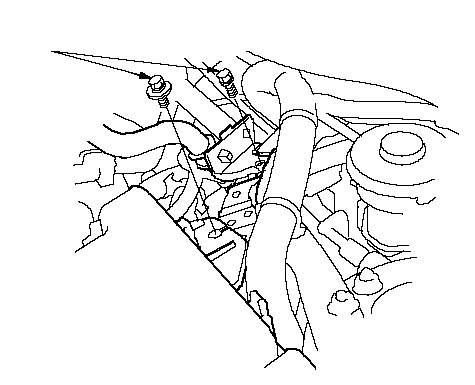 9.8 N·m (1.0 kgf·m, 9.8 N·m (1.0 kgf·m,
7.2 lbf·ft) |
| 2. | Remove the access panel (A), then remove the right strut brace (B).
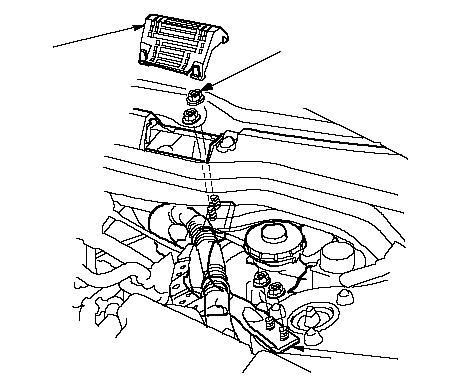 A8 x 1.25 mm A8 x 1.25 mm
22 N·m (2.2 kgf·m,
16 lbf·ft)B |
| 3. | Remove the reservoir cap and brake fluid from the master cylinder reservoir.
|
| 4. | Disconnect the brake fluid level switch connector (A).
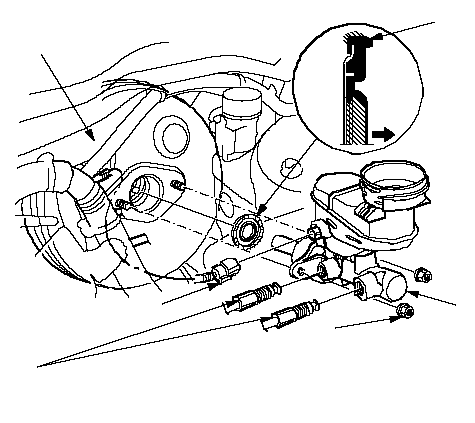 CB CB
ABS: 15 N·m (1.5 kgf·m, 11 lbf·ft)
VSA: 30 N·m (3.1 kgf·m, 22 lbf·ft)AD
8 x 1.25 mm
15 N·m (1.5 kgf·m,
11 lbf·ft)GFE |
| 5. | Disconnect the brake lines (B) from the master cylinder (C). To prevent spills, cover the hose joints with rags or shop towels.
|
| 6. | Remove the master cylinder mounting nuts (D) and washers.
|
| 7. | Remove the master cylinder from the brake booster (E). Be careful not to bend or damage the brake lines when removing the master cylinder.
|
| 8. | Remove the rod seal (F) from the master cylinder.
|
| 9. | Install the master cylinder in the reverse order of removal, and note these items:
|