Engine Mount Control System Troubleshooting

NOTE: Check the vacuum hoses and lines for damage and proper connections before troubleshooting.
Follow this procedure if the engine vibrates excessively when idling.
  1. Turn the ignition switch to ON (II).
  1. Make sure the HDS communicates with the vehicle and the engine control module (ECM)/powertrain control module (PCM). If it doesn't communicate, troubleshoot the DLC circuit.
  1. Raise the engine speed from idling to 2,000 rpm (min −1 ).
  1. Check the MOUNT CTRL SOL in the PGM-FI DATA LIST with the HDS.
Is ON indicated at idling and OFF indicated at 2,000 rpm (min −1 )?
YES -
Go to Step 7 .
NO -
Update the ECM/PCM if it does not have the latest software, or substitute a known-good ECM/PCM, then recheck. If the engine mount control system works properly, and the ECM/PCM was updated, the troubleshooting is complete. If the ECM/PCM was substituted, replace the original ECM/PCM.
  1. Turn the ignition switch to LOCK (0).
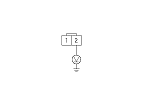
  1. Disconnect the engine mount control solenoid valve 2P connector from the engine mount control solenoid valve.
  1. Turn the ignition switch to ON (II).
  1. Measure the voltage between engine mount control solenoid valve 2P connector terminal No. 2 and body ground.
Is there battery voltage?
YES -
Go to Step 11 .
NO -
Repair open in the wire between engine mount control solenoid valve 2P connector terminal No. 2 and No. 7 (15 A) fuse in the driver's under-dash fuse/relay box.■
  1. Start the engine, and let it idle.

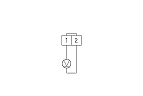
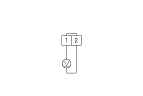
  1. Measure the voltage between engine mount control solenoid valve 2P connector terminals No. 1 and No. 2 with the engine at idle.
Is there battery voltage?
YES -
Go to Step 13 .
NO -
Repair open in the wire between ECM/PCM (B19) and the engine mount control solenoid valve 2P connector. If the wire is OK, update the ECM/PCM if it does not have the latest software, or substitute a known-good ECM/PCM, and recheck. If the engine mount control system works properly, and the ECM/PCM was updated, the troubleshooting is complete. If the ECM/PCM was substituted, replace the original ECM/PCM.
  1. Raise the engine speed above 1,000 rpm (min −1 ).

  1. Measure the voltage between engine mount control solenoid valve 2P connector terminals No. 1 and No. 2.
Is there battery voltage?
YES -
Repair short to body ground in the wire between ECM/PCM (B19) and the engine mount control solenoid valve. If the wire is OK, update the ECM/PCM if it does not have the latest software, or substitute a known-good ECM/PCM, and recheck. If the engine mount control system works properly, and the ECM/PCM was updated, the troubleshooting is complete. If the ECM/PCM was substituted, replace the original ECM/PCM.
NO -
Go to Step 15 .
  1. Turn the ignition switch to LOCK (0).

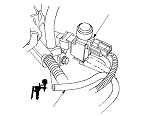
  1. Disconnect the upper vacuum hose (A) from the engine mount control solenoid valve (B), and connect a vacuum pump/gauge to the hose. Apply about 20 in.Hg of vacuum, and wait 20 seconds.
Does the engine mount hold vacuum?
YES -
Go to Step 17 .
NO -
Either the vacuum hose or the engine mount has a vacuum leak. Repair as needed.■
  1. Release the vacuum, then apply vacuum again.
Is there a noticeable change in idle smoothness with and without vacuum applied?
YES -
Go to Step 18 .
NO -
Replace the front engine mount.■

  1. Connect a vacuum pump/gauge to the engine mount control solenoid valve (A).
Is there manifold vacuum at idle, and a decrease in manifold vacuum when you raise the engine speed above 1,000 rpm (min −1 )?
YES -
The system is OK.■
NO -
Replace the engine mount control solenoid valve.■